 Request a Demo
 Download Brochure

System Requirements Mapping
Define what a LIMS needs to manage across sample tracking, testing, reporting, and data workflows. This keeps vendor evaluation aligned with real lab processes and operational needs.


Selecting a Laboratory Information Management System (LIMS) is a key technology decision that impacts compliance, data integrity, and lab efficiency. A structured LIMS selection process helps evaluate regulatory fit, deployment options, integrations, scalability, security, usability, and total cost of ownership. This ensures the chosen system meets current needs while supporting future growth and evolving laboratory requirements over time.
From infrastructure, security, and integration to validation and compliance, successful LIMS selection requires IT and QA/QC teams to work from shared evaluation criteria. This guide covers key LIMS capabilities, industry-specific requirements, commercial and open-source platforms, pricing models, and essential vendor questions to help labs make informed, future-ready technology decisions. For labs building a broader digital lab strategy, selecting the right LIMS provides the foundation for long-term digital transformation.
Define what a LIMS needs to manage across sample tracking, testing, reporting, and data workflows. This keeps vendor evaluation aligned with real lab processes and operational needs.
Ensure GxP, 21 CFR Part 11, and ISO 17025 support align with the lab’s regulatory requirements and quality management processes.

Assess cloud, on-premises, and hybrid options, along with instrument and enterprise integrations, to fit existing infrastructure and support seamless data exchange.
Evaluate vendors on security, support, scalability, and future requirements to ensure long-term suitability as laboratory operations and data volumes grow.
Compare licensing, validation support, and long-term maintenance to identify the best fit for the lab’s technical and compliance requirements
Consider licensing, implementation, integration, training, and maintenance to understand the full lifecycle cost and plan budgets with greater accuracy.
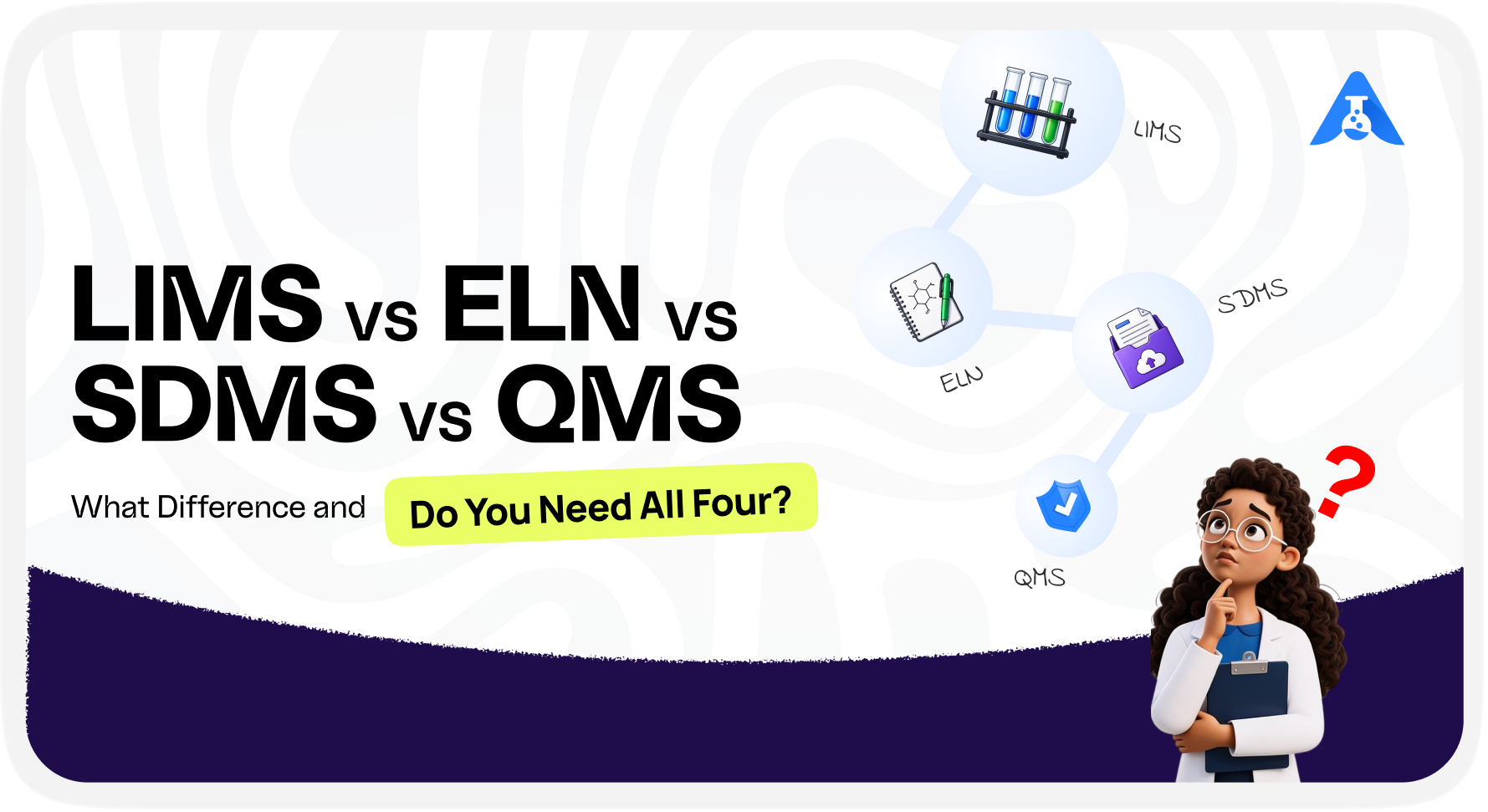
Before evaluating vendors, it is important to understand what each system manages and how they work together. This guide explains the roles of LIMS, ELN, SDMS, and QMS, their areas of overlap, and the key factors to consider when deciding which systems are needed. It helps labs align technology choices with workflows, compliance requirements, and long-term digital lab goals.
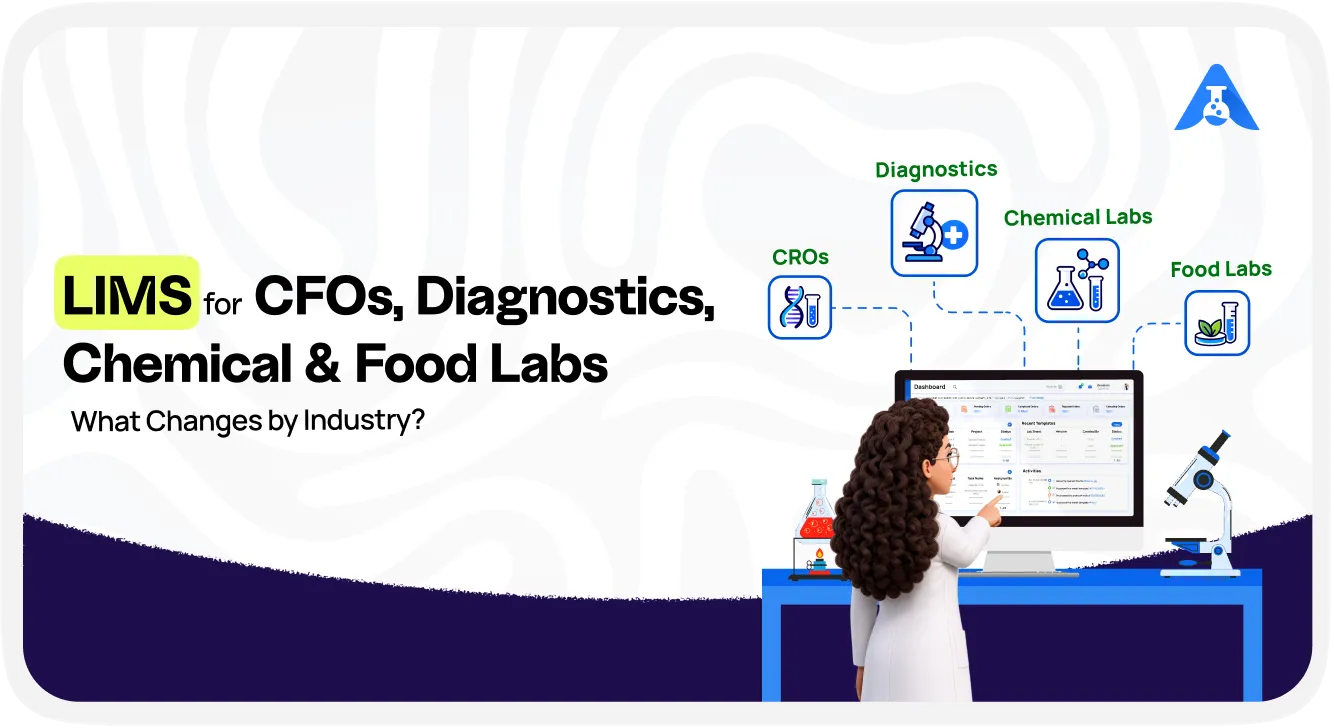
LIMS requirements can vary significantly depending on the industry, workflows, and regulatory environment. This guide explores what matters most for CRO, diagnostic, chemical, and food testing labs, helping teams evaluate LIMS solutions based on their specific operational and compliance needs rather than a generic checklist.
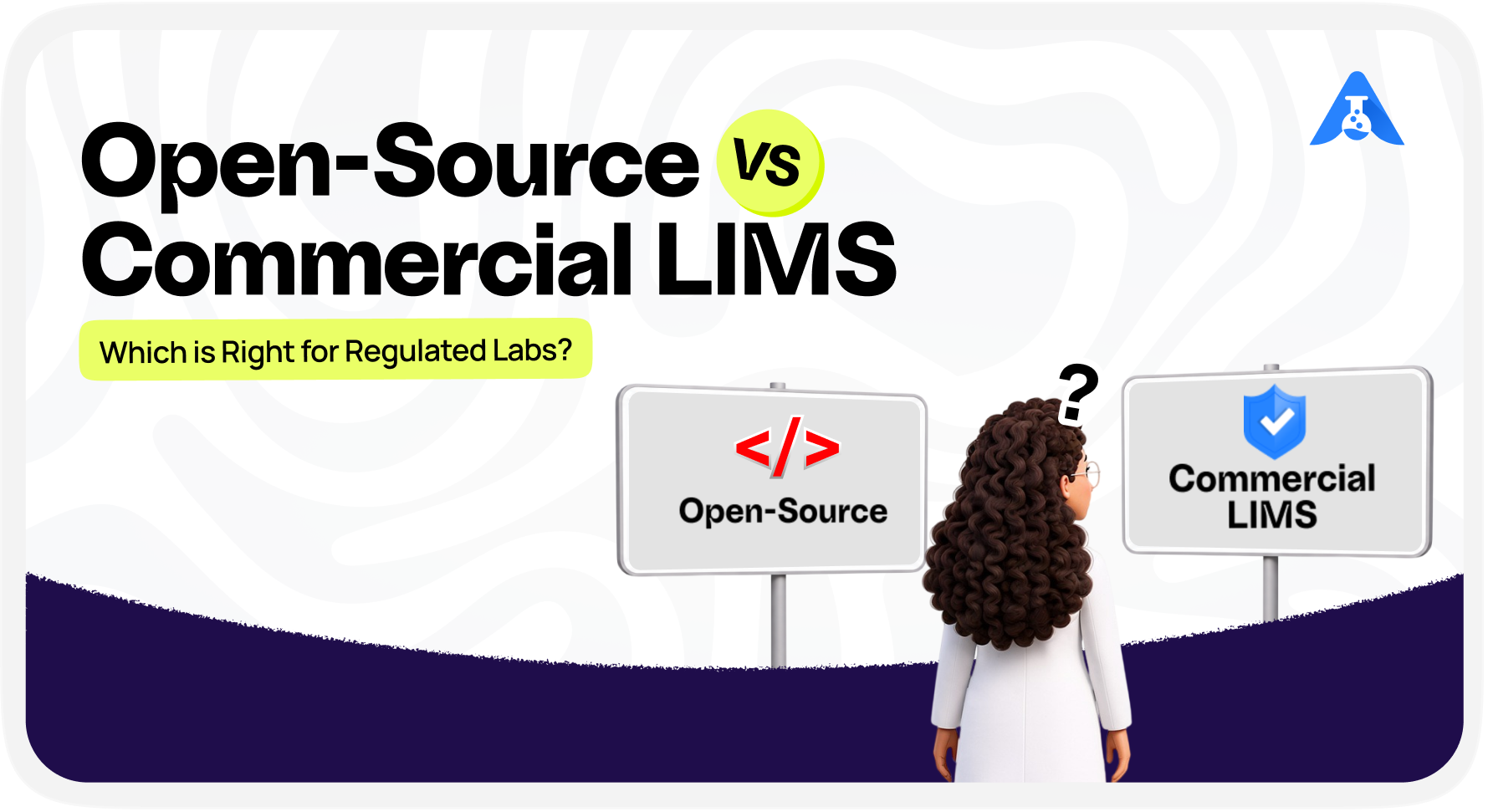
Open-source and commercial LIMS platforms differ in cost, support, validation, upgrades, and long-term ownership. This guide compares both LIMS options across key factors to help labs understand the key differences, assess their technical and compliance requirements, and choose an approach that aligns with their operational needs, resources, and budget.

Licensing is only one part of the total cost of a LIMS. This guide covers perpetual licenses, SaaS subscriptions, and open-source pricing models, along with implementation, validation, integration, training, and annual maintenance costs (AMC). Understanding these factors helps labs plan budgets accurately and assess the full investment required for a LIMS.
Get a personalized walkthrough tailored to your research, compliance needs, and budget, and find out which tools actually make sense for how your lab works.
 Talk to Our Experts
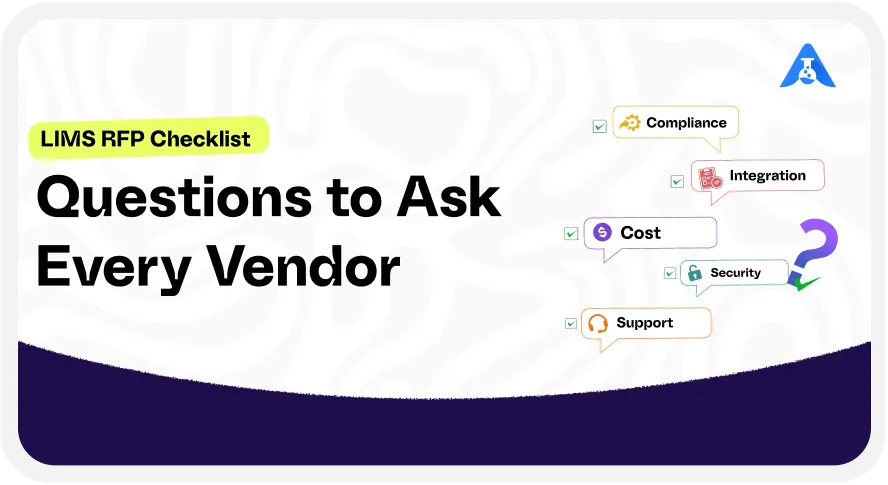
A structured RFP makes it easier to compare LIMS vendors fairly and consistently. This checklist covers key questions across licensing, compliance, integration, security, support, and scalability, helping labs evaluate each vendor against the same criteria. It helps identify gaps, compare responses, and select a LIMS that fits the lab’s operational and regulatory requirements.
The right combination depends on the lab’s workflows, research activity, data volume, and quality requirements. Routine QC labs may need only a LIMS , while research labs may benefit from an ELN and SDMS . A QMS becomes valuable as quality processes become more complex. Assessing current workflows first helps determine which systems are genuinely necessary. Talk to our experts to learn how these systems can support different laboratory workflows.
Commercial platforms like Qualis LIMS offer validation documentation, vendor-backed SLAs, and compliance features for GxP, 21 CFR Part 11, and ISO 17025 environments. Open-source systems eliminate licensing fees but place more responsibility for configuration, security, validation, and maintenance on the lab. The right choice depends on available technical resources, compliance needs, and long-term support requirements. Request a personalized LIMS demo to see the capabilities in action.
Data migration can involve transferring records from spreadsheets, paper logs, or legacy LIMS platforms. Vendors differ in their migration scope and pricing, so clarify data formats, migration responsibilities, validation, and costs before implementation. Early planning helps protect historical data and maintain its integrity during the transition. Get in touch with us today to discuss data migration and implementation requirements.
Licensing is only part of the total investment. Labs also need to consider implementation, workflow configuration, validation, instrument integration, data migration, training, and ongoing maintenance and support. These costs can significantly affect the overall LIMS budget. A complete cost estimate should account for these expenses from the beginning. For a complete LIMS implementation breakdown, get in touch with our experts today!
Compare licensing models, implementation costs, validation support, and ongoing maintenance rather than the license price alone. Looking at total cost of ownership provides a more accurate basis for comparing vendors. This approach also helps identify costs that may not appear in the initial quotation. Download the LIMS brochure to learn more about implementation and LIMS capabilities.
LIMS selection works best when both teams start with a shared requirements document. IT should define infrastructure, deployment, integration, and security needs, while QA/QC focuses on validation, audit trails, and regulatory requirements. A shared RFP keeps both teams aligned throughout vendor evaluation. This also helps prevent conflicting priorities later in the selection process. Contact us today to get started!
Modern LIMS platforms such as Qualis LIMS can integrate with ERP systems such as SAP through APIs, enabling data exchange without manual entry. Integration may also extend to laboratory instruments through Logilab SDMS, ELNs, clinical systems, and document management platforms. Confirming specific integration capabilities early helps narrow the vendor shortlist. It also reduces the risk of costly integration work after implementation. Access the complete list of supported instrument integrations .
Submit this form and our sales representative will
contact you soon.
Email Us:
sales@agaramtech.com


 Compare LIMS, ELN, SDMS, and QMS
 Explore Industry-Specific LIMS Needs
 Open-Source vs Commercial LIMS: See the Differences
 Download Brochure
  Contact Us