ALCOA+ Data Integrity Principles: How SDMS Enforces Them
 Request a Demo
 Download Brochure
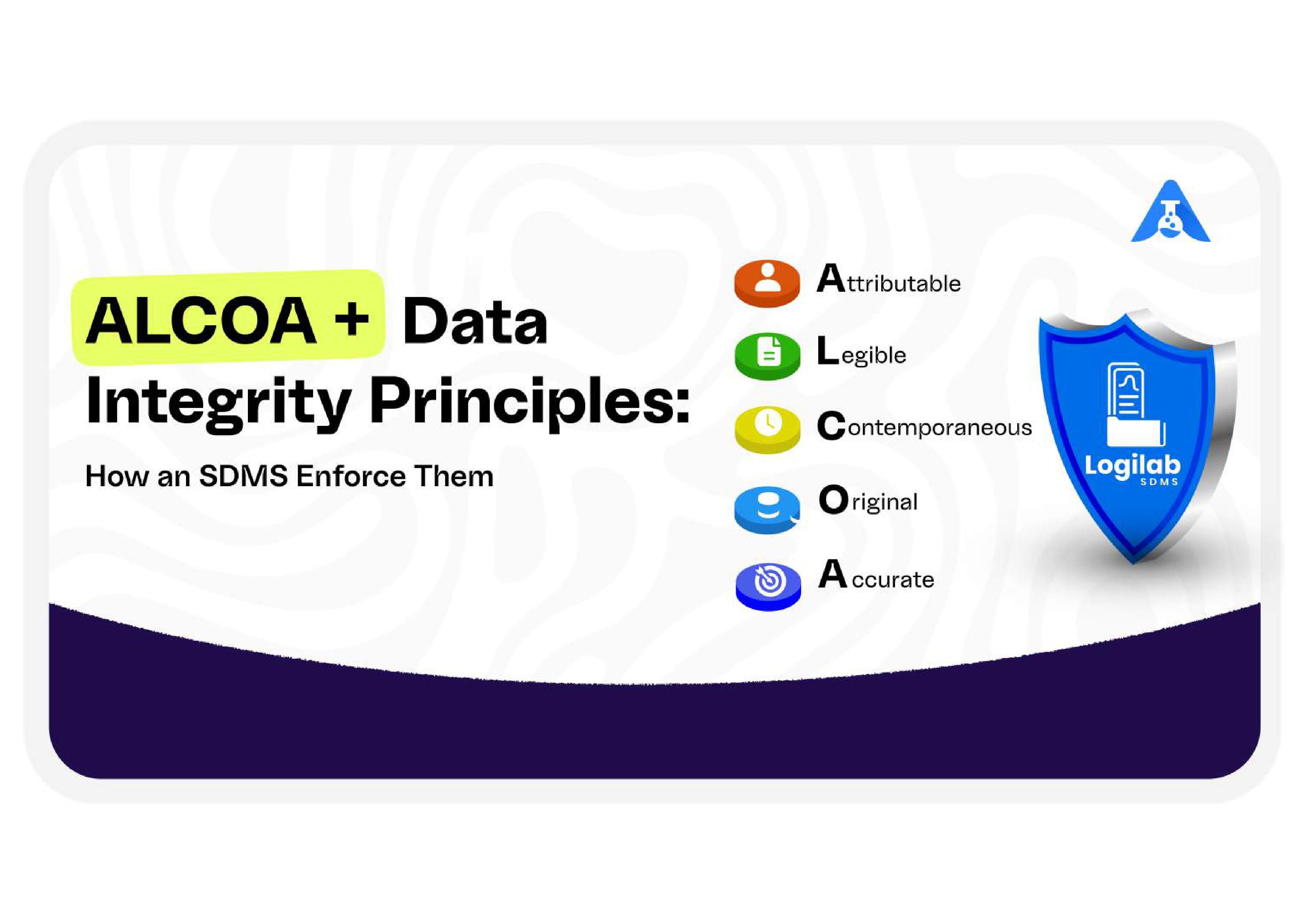
When an inspector asks a laboratory to demonstrate that its data is trustworthy, ALCOA+ data integrity principles provide a clear framework for what that evidence should look like. Yet meeting these principles can be difficult when scientific data is scattered across instrument PCs, shared folders, and disconnected systems. SDMS software helps address this challenge by building data integrity controls into how scientific data is captured, stored, accessed, and reviewed.
This guide explains the ALCOA+ principles, why they matter for laboratory data integrity, and how SDMS supports them through automated data capture, audit trails, access controls, original file preservation, and secure data management.
What Is ALCOA+?
ALCOA+ is a widely used framework for maintaining data integrity in regulated laboratories. It defines the qualities that scientific and electronic records should maintain throughout their lifecycle, helping ensure that data remains trustworthy, traceable, and available for review.
Attributable: Can the data be traced to the person or system that created or modified it?
Legible: Will the records remain readable and understandable throughout their retention period?
Contemporaneous: Was the data recorded when the activity or measurement took place?
Original: Is the original record or source data preserved?
Accurate: Does the data correctly represent the activity or result being recorded?
Complete: Is all relevant data, including changes and associated records, retained?
Consistent: Does the data follow an expected sequence and remain coherent across records?
Enduring: Will the records remain preserved and accessible throughout the required retention period?
Available: Can the data be readily retrieved when needed for review, audit, or inspection?
These principles support broader regulatory expectations for electronic records and data integrity, including 21 CFR Part 11, EU Annex 11, and GxP requirements. In practice, however, maintaining ALCOA+ data integrity principles can become difficult when data is manually transferred, stored on local instrument PCs, or scattered across uncontrolled folders. SDMS software helps address these gaps by automating data capture, preserving original files, controlling access, and maintaining an auditable record throughout the data lifecycle.
Many laboratories also rely on older GxP instruments that lack modern data integrity controls. To resolve this within the Logilab SDMS framework, CFR Gateway, Agaram Technologies’ compliance module, helps bring their electronic data workflows closer to 21 CFR Part 11 requirements, allowing laboratories to extend ALCOA+ controls without replacing trusted equipment.
How SDMS Software Enforces ALCOA+ Data Integrity Principles
Attributable
What it means: Every record and action should be traceable to the person or system responsible for it.
Attributable data can be traced to the user or system responsible for creating or modifying it. Logilab SDMS uses granular role-based access control integrated with Windows Active Directory Services for user authentication. Uploads, downloads, modifications, restorations, reviews, and approvals can be linked to individual user IDs.
Electronic signature gates can also be added to review and approval workflows, helping replace shared logins and paper-based signoffs with controlled electronic processes.
Legible
What it means: Data should remain readable and understandable throughout its required retention period.
Scientific records need to remain readable throughout their retention period, even when the original instrument software is no longer available. Logilab SDMS uses a virtual printer driver to create human-readable PDF copies of proprietary instrument outputs and reports while retaining the original raw files.
Its browser-based viewer also supports common formats such as PDF, CSV, TXT, and TIFF, allowing reviewers to access records without requiring the original instrument software.
Contemporaneous
What it means: Data should be recorded at the time the activity or measurement occurs.
Data should be captured when the laboratory activity takes place rather than reconstructed later. Logilab SDMS uses automated background schedulers to capture files from instrument PC directories as data is generated. File activities and system events are also recorded with timestamps.
This reduces reliance on manual transfers and creates a documented timeline from the point of data generation.
Original
What it means: The original record or source data should be preserved and remain available for review.
Original data must be preserved as the primary record. Logilab SDMS transfers raw files through secure FTP or SFTP and replicates the original instrument folder structure within the central repository. Original files can be retained in secure cloud or on-premises storage with controls designed to protect them from unauthorized changes or deletion.
Preserving the original structure also makes records easier for analysts and auditors to locate and review in their original context.
Accurate
What it means: Data should correctly represent the activity or result being recorded.
Accurate data starts with reliable capture. Logilab SDMS collects data directly from PC-based instruments, standalone devices through RS232, TCP/IP, or analog connections, and clinical IVD analyzers through Agaram Technologies' Interfacer middleware. This reduces the need for manual retyping and helps minimize transcription errors.
Checksum verification can also validate file integrity during transfer between the instrument PC and central storage, helping confirm that the stored file matches the source.
Complete
What it means: All relevant data and associated records should be retained without unexplained gaps.
Complete records include the data itself and the relevant history surrounding it. Logilab SDMS maintains audit trails covering activities such as file downloads, version restores, metadata updates, service state changes, and communication errors.
By recording these events, the system helps make gaps and failed transfers visible rather than leaving them undocumented.
Consistent
What it means: Data should follow a consistent sequence and maintain a clear history throughout its lifecycle.
Consistent data requires a clear and traceable record of changes. Logilab SDMS supports auto-versioning, version history, and version rollback, allowing laboratories to track different iterations of a file while retaining access to previous versions. This provides a documented sequence of changes and helps prevent uncertainty about which version of a record was used or reviewed.
Enduring
What it means: Data should remain preserved and protected throughout the required retention period.
Scientific records need to remain protected and accessible throughout their required retention period. Logilab SDMS can be deployed using high-availability infrastructure on platforms such as Microsoft Azure, with options for geo-redundancy and automated daily backups. It can also be deployed on customer-owned infrastructure when an on-premises environment is preferred.
These options help laboratories preserve scientific records over the long term while aligning the data environment with their operational requirements.
Available
What it means: Data should be readily accessible when needed for review, investigation, audit, or inspection.
Data integrity also depends on being able to retrieve records when required. Logilab SDMS supports metadata tagging by project, sample ID, and batch number, while its web-based parser can extract structured values from raw instrument outputs.
This makes scientific data easier to search and retrieve, while REST APIs allow parsed information to be made available to downstream systems such as LIMS and ELN when required.
Download SDMS brochure to discover smarter scientific data management
Conclusion
ALCOA+ data integrity is difficult to maintain when laboratories rely on manual data transfers, scattered files, and disconnected instrument workflows. SDMS software helps turn these principles into practical controls by automating data capture, preserving original records, controlling access, and maintaining a complete audit history. When data integrity is built into the workflow, laboratories can spend less time proving where their data came from and more time using it with confidence.
Follow a scientific record from instrument capture to secure storage and audit history with an SDMS software. Book a personalized SDMS demo and put your data integrity workflow to the test today!
- What Is ALCOA+?
- How SDMS Software Enforces ALCOA+ Data Integrity Principles
- Attributable
- Legible
- Contemporaneous
- Original
- Accurate
- Complete
- Consistent
- Enduring
- Available
- Conclusion