How SDMS Centralizes Scientific Data Across Laboratories
 Request a Demo
 Download Brochure
Introduction
Imagine a system that seamlessly integrates with your existing laboratory setup, automating data capture from any instrument while securing your valuable data with the highest compliance standards. Managing and securing research data effectively is more crucial than ever in today’s data-intensive scientific environment.
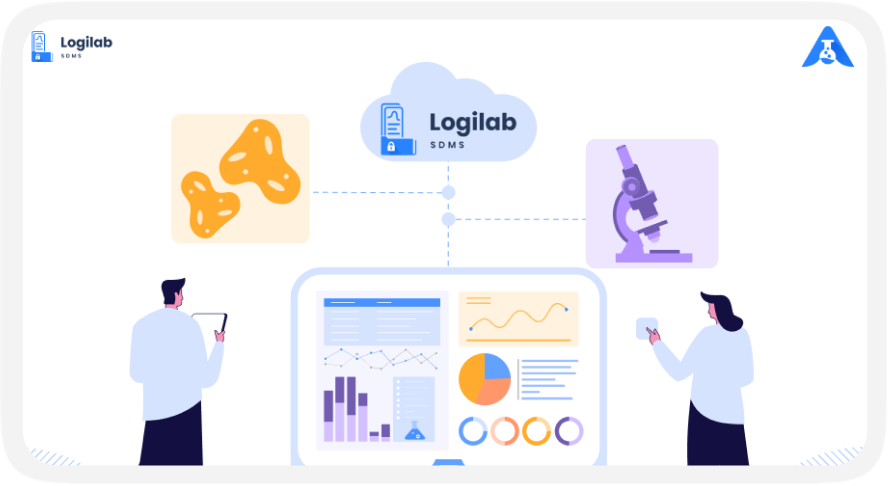
That's exactly what Logilab SDMS does. It's an advanced solution designed to transform the way laboratories handle their data, helping teams stay at the forefront of innovation. Its features range from seamless data access to comprehensive audit trails that meet rigorous regulatory standards.
Whether you’re in pharmaceutical research, academic studies, or the biotechnology sector, understanding how Logilab SDMS simplifies data management with its easy-to-implement features and seamless integration across instruments will be crucial for your groundbreaking research.
What is SDMS?
Scientific Data Management System (SDMS) plays a crucial role in the modern laboratory environment, addressing the intricate needs of data handling and management across various scientific fields. An SDMS is essentially a software platform or system designed to collect, manage, store, and archive data generated from scientific experiments and instruments.
Overview of SDMS
- Data Collection: Scientific Data Management System automate the collection of data from various laboratory instruments and experiments. This helps in reducing manual errors and ensures that data is captured in a consistent format.
- Data Storage and Management: SDMS provide a structured way to store both raw and processed data. This often includes powerful search capabilities, enabling quick retrieval of data for analysis and review.
- Integration: They often integrate with other laboratory information systems like LIMS (Laboratory Information Management Systems) or ELNs (Electronic Laboratory Notebooks), providing a comprehensive view of all laboratory data.
- Data Security and Backup: SDMS ensure that data is securely stored and backed up, protecting against data loss and ensuring data integrity, which is crucial for compliance with various standards.
Importance of SDMS in Laboratories
Improved Laboratory Efficiency
Scientific Data Management Systems enhance laboratory efficiency by automating data capture from instruments, reducing manual entry, and minimizing transcription errors. Centralized data storage also allows scientists to quickly access, retrieve, and compare results across experiments, instruments, and time periods, improving productivity in complex research environments.
Enhanced Data Reliability and Integrity
SDMS helps maintain data integrity by providing features such as audit trails, version control, and complete data traceability. Every step in the data lifecycle, from initial instrument output to review, modification, and approval, is recorded. Standardized data collection and storage practices also improve consistency, reproducibility, and confidence in scientific results.
Supporting Regulatory Compliance
Laboratories operating in regulated environments must comply with standards such as FDA 21 CFR Part 11, Eudralex Annex 11, MHRA guidelines, ALCOA+ principles, and Good Laboratory Practice (GLP) requirements. SDMS supports compliance by maintaining secure, traceable, and well-organized electronic records while reducing reliance on manual documentation.
With evolving regulatory expectations, including risk-based approaches to software validation and increasing alignment between global data integrity standards, laboratories benefit from systems that are designed to support both current and future compliance requirements.
Simplified Audit Readiness
SDMS improves audit preparedness by providing quick access to complete data records, reports, and audit logs. Instead of manually collecting documentation during inspections, laboratories can retrieve organized and traceable information whenever required, reducing audit stress and improving transparency.
Enabling Smarter Scientific Research
By automating routine data management tasks, improving data quality, and supporting regulatory compliance, SDMS allows researchers to focus more on scientific discovery rather than administrative processes. These systems help laboratories build more efficient, reliable, and future-ready research environments.
About Logilab SDMS
Agaram Technologies’ Logilab SDMS is an advanced software system designed to handle scientific instrument data from any analytical instrument and can facilitate data management with access control. It performs scheduled data capture, cataloguing, archival, while also enabling data restoration when required. The platform can extract relevant data from instrument output and transfer it to external systems like ELN, LIMS or ERP. The data files captured are stored as flat files on a secure FTP file server with encrypted filenames.
Data access is controlled through user permissions to ensure security, while metadata such as data source, timestamps, file details, checksums, and user tags are stored alongside extracted data. Full-text indexing enables quick data retrieval, and built-in integration tools support seamless connectivity with external systems.
Logilab SDMS Features: Centralized Data Management
Logilab Scientific Data Management System being a sophisticated Scientific Data Management System has the capability to meet the diverse needs of modern laboratories by enhancing data security, ensuring regulatory compliance, and streamlining operations through automation and integration. Here are the key features of Logilab SDMS that highlight its capabilities:
1. Data Scheduler
This feature automatically captures data in any format from any instrument, whether PC-based or not, including those using RS232 and TCP/IP interfaces. It then securely stores this data in a central repository with version control, ensuring that data integrity is maintained and that previous versions are accessible for reference or audit purposes.
2. Data Explorer
The Data Explorer allows for easy navigation through the system with a user interface designed for security, speed, and efficiency. It supports a broad and fast search capability, enhancing the ability to quickly locate specific datasets, files, or results within the massive volumes of data typically found in scientific research.
3. PDF Print
This feature enables users to view, download, and print data in a PDF format, which is critical for compliance with FDA 21 CFR Part 11 standards. These standards require that electronic records be kept in a human-readable format, which can be easily accessed for review and auditing.
4. Metadata Tagging and Templates
Metadata tagging and the use of templates facilitate better organization, categorization, and standardization of data. This helps in easy identification and retrieval of data, streamlining the research process and ensuring consistency across experiments and studies.
5. User and Password Management
Logilab Scientific Data Management System includes a robust user and password management system that enhances security and operational control through role-based access. This feature ensures that only authorized personnel have access to sensitive data and system functionalities, reducing the risk of unauthorized data manipulation.
6. Audit Trail
The system maintains a comprehensive audit trail that records all changes made to the data, including who made the change, when it was made, and why. This capability is crucial for regulatory compliance and helps in maintaining the integrity and traceability of data.
7. Electronic Signature
Electronic signature is a part of Logilab SDMS features to ensure compliance with FDA 21 CFR Part 11 and Eudralex Annex 11. It helps in tracking data alterations and approvals, ensuring that all changes are authorized and documented.
8. Parsing Engine
The Parsing Engine simplifies the extraction of specific data points from complex datasets, allowing researchers to find and extract the information quickly and easily they need without having to manually sift through extensive data.
9. Mobile Application
Logilab SDMS offers a mobile application that enables data recording and access on the go, allowing for real-time data entry and review, which is essential for dynamic laboratory environments where timely data capture and access are critical.
10. CFR Gateway
This feature bridges the gap for instruments that are not inherently compliant with certain regulatory standards. It adds an extra layer of user authentication and protects data from unauthorized modifications or deletions, bringing older or less sophisticated instruments up to compliance standards.
11. Integration
Logilab Scientific Data Management System integrates seamlessly with other key laboratory systems such as Electronic Lab Notebooks (ELN), Laboratory Information Management Systems (LIMS), and Enterprise Resource Planning (ERP) systems. This integration capability ensures error-free, automated data flow across platforms, enhancing data accuracy and laboratory efficiency.
These features make Logilab SDMS an invaluable tool for modern laboratories, ensuring that data management is both efficient and compliant with the stringent standards required in scientific research and development.
Benefits of Implementing Logilab SDMS
Implementing Logilab SDMS in laboratory environments can significantly enhance various aspects of data management and overall lab operations. Here are the specific benefits across efficiency, data integrity, and accessibility:
Simple and Easy to Use Application Interface
Logilab Scientific Data Management System offers a user-friendly interface that is intuitive and easy to navigate. This simple design:
Improves User Experience: A straightforward interface reduces the learning curve for new users and enhances user confidence as they navigate through different functionalities.
Increases Efficiency: When users can quickly find what they need without complications, it speeds up data entry, retrieval, and processing, boosting overall productivity.
Time Savings
Faster Implementation: Logilab SDMS is designed for quick deployment, with minimal disruption to existing lab operations. Its compatibility with standard laboratory hardware and software speeds up the integration process.
Operational Efficiency: The automation of data capture and management processes reduces the time required for manual data handling. This means that laboratory staff can focus more on analytical and research tasks rather than administrative duties.
Cost Savings
Reduction in Paper Use: By digitizing records and using electronic formats for data storage and communication, labs can significantly reduce their reliance on paper. This not only cuts costs associated with paper, printing, and storage but also supports environmental sustainability.
Efficient Data Management: Digital data management reduces the need for physical storage space and resources, further driving down costs.
Low Cost of Ownership
Standard Technology Architecture: Logilab Scientific Data Management System is built on standard, widely-used technology platforms, which often translates into lower software and hardware costs. This standardization also simplifies maintenance and upgrades, reducing the total cost of ownership over the system’s lifespan.
Low Cost of Compliance
Adherence to Regulatory Standards: The system’s built-in compliance features with standards like FDA 21 CFR Part 11 and Eudralex ensure that labs meet regulatory requirements without the need for extensive custom modifications or additional software, which can be costly.
Audit Preparedness: With robust audit trails and electronic signatures, Logilab Scientific Data Management System simplifies the compliance and audit processes, reducing the resources and time typically required for audit preparation and execution.
Minimal Error
Reduction in Human Error: Automation of data capture and management minimizes the errors typically associated with manual data entry and processing. This enhances the accuracy and reliability of data, which is critical in research and development environments.
Consistent Data Handling: Automated workflows ensure that all data is handled in a consistent manner, further reducing variability and error, and enhancing the reproducibility of experiments.
Implementing Logilab SDMS in laboratories can lead to substantial improvements in efficiency, cost-effectiveness, and compliance, while also ensuring high standards of data integrity and accessibility. These benefits collectively enhance the capability of laboratories to perform high-quality research and development efficiently and economically.
Case Study Examples
Below are few case studies illustrating how laboratories might implement Logilab Scientific Data Management System to enhance their operations, improve efficiency, and maintain compliance with regulatory standards. These examples cover different types of laboratory settings: pharmaceutical, academic research, and biotechnology.
Case Study 1: Pharmaceutical Laboratory
Background: A mid-sized pharmaceutical company needed to streamline their data management to cope with the increasing volume of data from new drug trials and to ensure compliance with FDA regulations.
Implementation: The company implemented Logilab SDMS to automate the capture and management of data from various sources, including high-throughput screening systems and clinical trial databases. They utilized the Data Scheduler for automated data inputs and the Audit Trail feature to ensure every data modification was recorded.
Benefits
Enhanced Compliance: With Logilab SDMS, the lab was able to adhere strictly to FDA 21 CFR Part 11 requirements, significantly reducing the risk of non-compliance penalties.
Increased Efficiency: Automation reduced the time scientists spent on data management, allowing them to focus more on analytical and developmental tasks.
Cost Efficiency: By going paperless, the company saved on storage and material costs, and the easy integration reduced IT overheads.
Case Study 2: Biotechnology Startup
Background: A biotechnology startup focused on personalized medicine needed a robust system to handle complex data securely and comply with stringent privacy regulations.
Implementation: The startup implemented Logilab Scientific Data Management System with a strong focus on its User and Password Management and CFR Gateway features to ensure that all data handling met industry standards and patient confidentiality requirements.
Benefits
Secure Data Handling: Enhanced security features ensured that sensitive genetic data was securely stored and only accessible to authorized personnel, aligning with HIPAA and other privacy standards.
Regulatory Compliance: The Electronic Signature and Audit Trail functionalities helped the company maintain a high standard of data integrity and traceability required by regulatory bodies.
Operational Efficiency: The Parsing Engine and Mobile Application allowed field data collection and real-time analysis, crucial for the fast-paced environment of a biotech startup.
These examples show how Logilab SDMS can be tailored to meet the specific needs of different types of laboratories, providing substantial benefits in terms of efficiency, compliance, and cost savings. Each implementation highlights the adaptability of Logilab SDMS to various scales of operation and types of research, making it a valuable tool in any laboratory’s data management strategy.
Conclusion
Scientific Data Management Systems have become essential for laboratories seeking to manage growing volumes of scientific data while maintaining efficiency, accuracy, and regulatory compliance. By centralizing data from multiple instruments and sources into a secure, searchable repository, they improve data integrity, strengthen traceability, reduce manual effort, and support collaboration across teams. These capabilities enable laboratories to make faster, more informed decisions while ensuring that critical data remains accessible throughout its lifecycle.
Logilab SDMS brings these capabilities together in a single platform, helping laboratories automate data capture, simplify compliance with regulations such as FDA 21 CFR Part 11, and create a scalable foundation for future growth. As scientific data continues to increase in volume and complexity, adopting a robust SDMS allows laboratories to improve operational efficiency while maintaining the reliability and integrity of their research.
Is your laboratory spending too much time managing data instead of generating insights? Request a personalized SDMS demo to discover how you can centralize scientific data, streamline laboratory workflows, and strengthen regulatory compliance.
- Introduction
- What is SDMS?
- Importance of SDMS in Laboratories
- About Logilab SDMS
- Benefits of Implementing Logilab SDMS
- Case Study Examples
- Conclusion

Related articles

Logilab ELN vs. Logilab ELN Lite: Finding the Right Fit for Your Lab
In today’s rapidly evolving research environment, managing and securing experimental data is more critical...

How LIMS Software Helps Achieve FDA 21 CFR Part 11 Compliance
In the intricate landscape of laboratory operations, adherence to stringent regulatory standards is crucial...

Streamlining Scientific Excellence: Unveiling the Power of Logilab ELN’s Sheet Templates
Introduction In the dynamic landscape of scientific research and laboratory operations, the effective manag...
 Contact Us