
CAPA Response to FDA 483 Findings: A Step-by-Step Guide
 Request a Demo
 Download Brochure
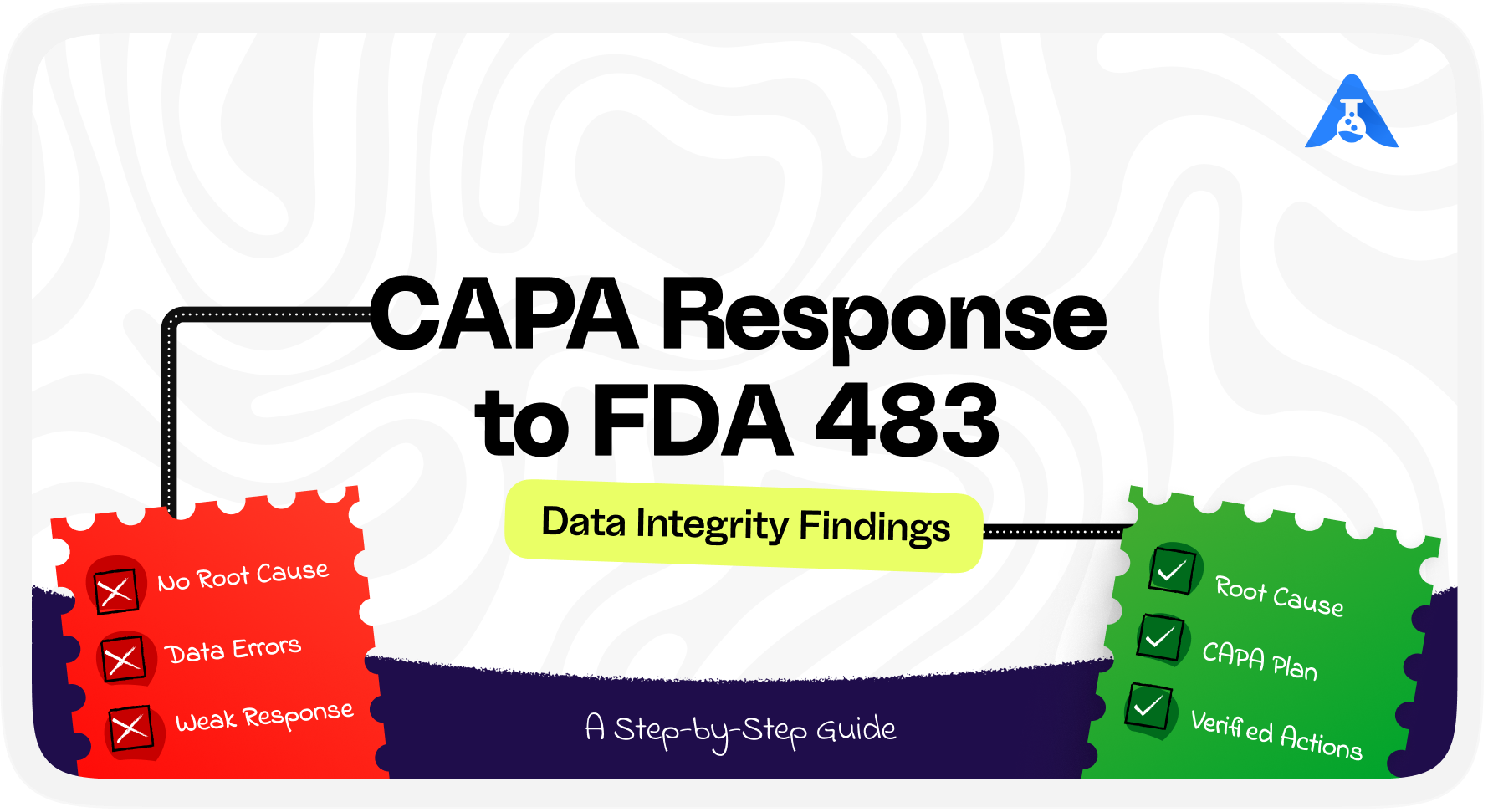
CAPA Response to FDA 483 Data Integrity Findings: A Step- by- Step Guide
When a pharmaceutical organization receives an FDA Form 483 citing data integrity issues, the response must be immediate and well structured. A strong CAPA FDA 483 data integrity response demonstrates control, accountability, and commitment to compliance. For QA Directors and Regulatory Affairs teams, this is a high stakes moment where the quality of the response can determine whether the issue is resolved or escalates further.
Why CAPA Is Critical After FDA 483 Findings
Corrective and Preventive Action, or CAPA, is the foundation of an effective response to FDA 483 observations. It goes beyond fixing the immediate issue and focuses on identifying root causes and preventing recurrence.
Regulators expect organizations to demonstrate that they fully understand the problem and have implemented sustainable solutions. A weak or incomplete CAPA FDA 483 data integrity plan can lead to additional scrutiny and potential enforcement actions.
Step 1: Acknowledge the Observation
The FDA 483 response letter should begin with a clear acknowledgment of the findings. The tone should be professional and objective, avoiding defensive language. This demonstrates accountability and sets the stage for a constructive response.
Step 2: Conduct Root Cause Analysis
Root cause analysis is the most critical step in the CAPA process. Organizations must identify the underlying causes of the findings rather than addressing only the symptoms.
Techniques such as the five whys method, fishbone diagrams, and failure mode and effects analysis can help uncover systemic issues. A thorough analysis ensures that corrective actions are targeted and effective.
Step 3: Assess Scope and Impact
Understanding the extent of the issue is essential. This includes identifying affected products, processes, and data sets. Organizations must also evaluate whether there is any risk to product quality or patient safety.
This step helps prioritize actions and ensures that critical issues are addressed first.
Step 4: Define Corrective Actions
Corrective actions focus on resolving the immediate problem. Examples include restoring missing data, correcting documentation errors, revalidating methods, or retraining personnel.
Each action should be clearly defined, measurable, and assigned to a responsible individual. Timelines should be realistic and aligned with the complexity of the issue.
Step 5: Define Preventive Actions
Preventive actions address the root cause and aim to eliminate the risk of recurrence. These may include revising SOPs, implementing new technologies, strengthening access controls, and enhancing training programs.
Strong preventive actions demonstrate long term commitment to compliance and system improvement.
Step 6: Implement Technology Solutions
Technology plays a key role in strengthening CAPA plans. Digital systems with features such as audit trails, electronic signatures, and secure access controls can significantly reduce the risk of data integrity issues.
These systems also improve efficiency and provide better visibility into laboratory operations.
Step 7: Assign Responsibilities and Timelines
Clear accountability is essential for successful CAPA implementation. Each action item should have a designated owner and a defined timeline. This ensures that tasks are completed efficiently and progress can be tracked.
Step 8: Monitor Effectiveness
CAPA does not end with implementation. Organizations must evaluate whether the actions taken are effective in preventing recurrence. This can be done through follow up audits, performance metrics, and ongoing monitoring.
Continuous evaluation helps identify any remaining gaps and supports long term improvement.
Step 9: Prepare the FDA 483 Response Letter
The FDA 483 response letter should be structured, detailed, and evidence based. It should include acknowledgment of the findings, root cause analysis, corrective and preventive actions, and implementation timelines.
Supporting documentation should be provided to demonstrate the actions taken. A clear and well organized response increases the likelihood of a positive regulatory outcome.
Common Mistakes to Avoid
Organizations often make avoidable mistakes when preparing a CAPA FDA 483 data integrity response. These include providing vague explanations, failing to identify true root causes, ignoring systemic issues, and missing deadlines.
Avoiding these pitfalls is essential for maintaining credibility with regulators.
Conclusion
A CAPA response to FDA 483 data integrity findings is one of the most critical interactions between a pharmaceutical organization and regulators. It reflects not only how well the issue is understood, but also how effectively the organization can implement lasting corrective and preventive measures.
The strength of a CAPA FDA 483 data integrity plan lies in its ability to connect root cause analysis with practical, sustainable actions. Regulators expect clarity, accountability, and evidence that the same issue will not recur. A well-structured response demonstrates control over processes and commitment to continuous improvement.
- CAPA Response to FDA 483 Data Integrity Findings: A Step- by- Step Guide
- Why CAPA Is Critical After FDA 483 Findings
- Step 1: Acknowledge the Observation
- Step 2: Conduct Root Cause Analysis
- Step 3: Assess Scope and Impact
- Step 4: Define Corrective Actions
- Step 5: Define Preventive Actions
- Step 6: Implement Technology Solutions
- Step 7: Assign Responsibilities and Timelines
- Step 8: Monitor Effectiveness
- Step 9: Prepare the FDA 483 Response Letter
- Common Mistakes to Avoid
- Conclusion